
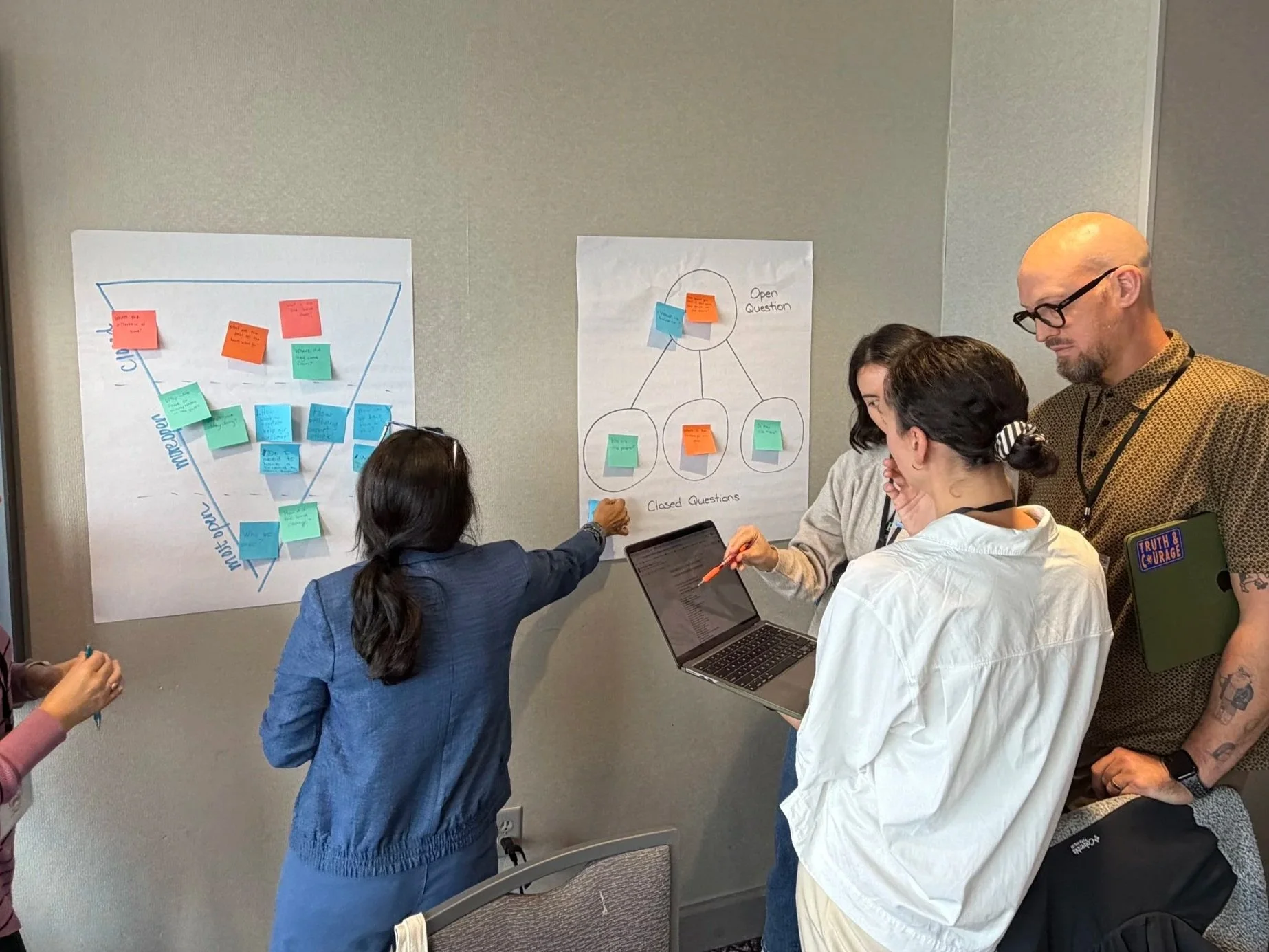
Since Inquiry Mindset Questions Edition was published in 2024 I have observed schools around the world get strategic and intentional in supporting student’s question competence. Schools have created a vertical progression of Question Routines across grade levels reflecting an ongoing commitment to flexing the questioning muscle. Teachers dedicate consistent time with a single routine for an extended period, helping students become more independent in their questioning skillset. In many cases the Question Routines become structures for independent / free inquiry such as in PYPX wherein agency is directly supported by the type of organizational thinking the Question Routines support.
In all of these circumstances, one question has surfaced over and over again: I have questions, now what do I do with them?
If you have found yourself in a similar place, please consider engaging in this planning process:
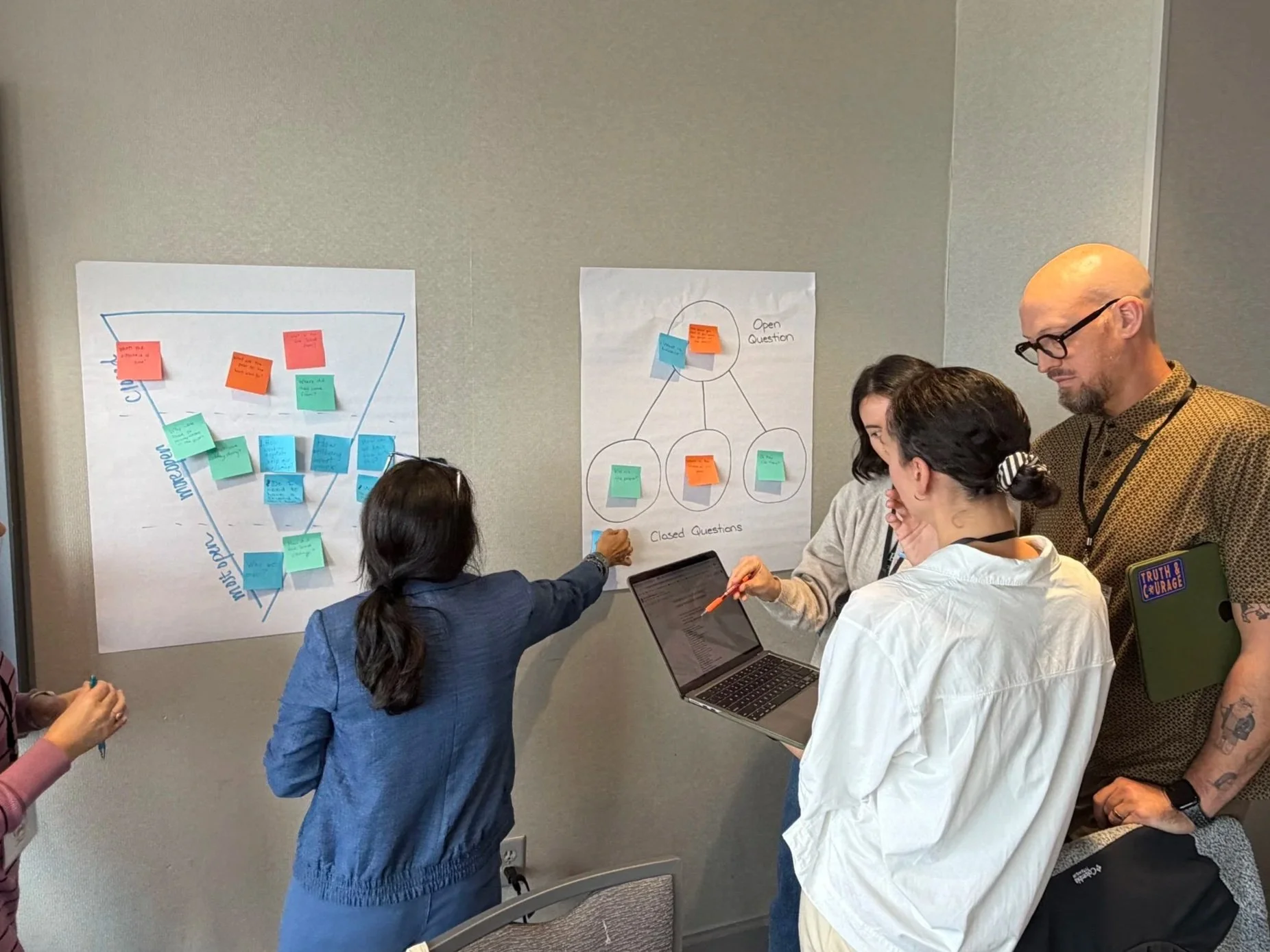
Reflect on the questions from the Question Routine: spend some time examining the questions you and your students have generated and sorted into the Question Routine. It is best to reflect on these questions without your students, perhaps after school, during a prep block, or during a PLC or planning period. Examine the posted questions with a critical eye on your curriculum, your curricular plans, and your current unit of study. Open your unit plan and review where you are currently in this learning journey and begin to identify which questions are most curricularly aligned. Ask yourself: which questions will help us in this learning journey in the immediate lessons before us? Cherry pick these questions.
Use the Question Pyramid to begin planning with these selected questions: draw the Question Pyramid on a large piece of paper and use this routine as a planning pyramid. Select an open-ended question from your Question Routine and place it in the top circle. This open-ended question represents the conceptual understanding of the learning, the enduring understanding you are planning towards, the north star for the coming lessons. This open-ended will act as your umbrella question for other questions to fall under. Then turn your eye to the closed-ended questions in the Question Routine and look for three questions that help deepen the understanding of your selected open-ended question. Which questions do we need to answer? Which questions are critical and connected to your open-ended question? Place these questions in the bottom three circles.
Plan lessons using the Question Pyramid: these sorted questions provide a short plan to surface. Use these questions to plan some lessons towards. What might you read, examine, watch, study, or teach that will help you all find information and answer these questions? The Question Pyramid will give you enough material and scope for a certain number of lessons, but not an entire unit. Some teachers use their Question Pyramid to plan a single lesson or assignment while some use it to plan a series of lessons across several weeks. You will find your questions get you only so far in your unit plan. Don’t over exhaust them or try to squeeze too much out of them. Keep in mind the rest of your unit plan and the other curricular objectives on your horizon. When you are ready to push forward, consider rolling out another provocation experience followed by a Question Routine, thus allowing you to go through this planning process again.
Model your question sort into the Question Pyramid for your students: the immediate lesson after your have planned using the Question Pyramid, begin class by inviting students to revisit the Question Routine they helped create. Beside your routine, post an empty Question Pyramid. Begin modelling your own thinking as you select the cherry picked questions from your own prior reflecting and planning experience. Explicitly discuss and show the connections across the questions you are pulling from one routine as you place them into your pyramid. The objective of this process is to help students see how questions are connected and can lead to next steps in learning. Consider inviting them into the thinking by asking them to identify questions in the routine that they feel might be connected. This modelling will help create a deeper understanding the role questions play in inquiry. Let students know that subsequent lessons will be designed to help answer these questions.
Explicitly identify the cherry picked questions in the lessons that follow: however you plan to explore these questions, please reference them each lesson, discuss them with students, invite them to gather evidence towards them, and share this evidence with one another. This explicit lifting up of questions will help students see the connections across the entire inquiry and, over time, become increasingly ready for independent / free inquiry.
A few helpful tips that will strengthen this process and help ensure that there is alignment between your unit plan and the question generated and planning process:
First, plan your provocations with your unit in mind. Consider the specific vocabulary the provocations will surface for students and how this vocabulary will show up in their questions. Intentional provocation design will help the questions students ask to converge on the unit rather than pull you away from your curriculum.
Second, make this vocabulary visible. During the provocation experience, consider creating a Word Bank that students can use to help them write their questions. This universal support will help the questions students generate be more curricularly robust.
Third, as students are generating their questions, draft your own questions and add them to the routine. Think about your unit plan and as students are sorting their questions, consider which questions are not being asked that might be helpful for your next steps with the Question Pyramid planning process. Adding your own questions to the Question Routine will help the convergence needed.
Colleague Erica Thompson has created this resource to help simplify the process. Consider bringing this sequence of steps to your own question work with students to help take steps towards more independent / free inquiry.
